
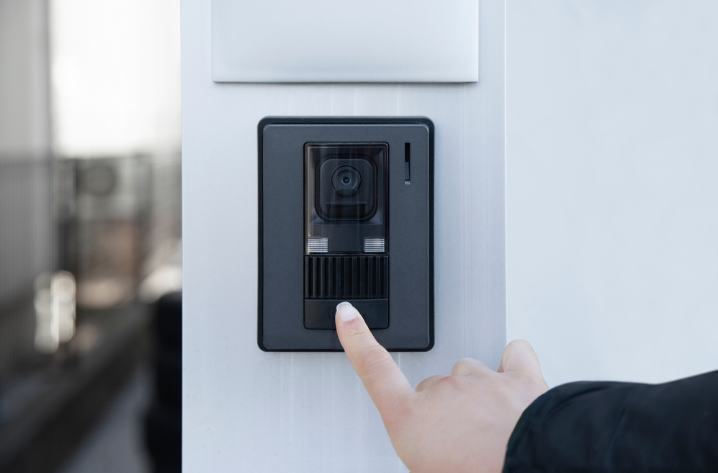

Ring changed our perception of exterior video surveillance when it introduced the first video doorbell some years ago. The video doorbell’s unique value proposition is clear: it functions as both a security device and a way to let guests know they are standing outside your door. But from a purely security-based perspective, is a video doorbell enough? Does a homeowner need a second camera?
The video doorbell is now considered the gold standard for surveillance of the front door. It offers:
- Eye level views.
- Real time video feeds.
- On-board audio for communicating with visitors.
Most video doorbells are also surprisingly easy to install and manage. If you are handy with both a screwdriver and a smartphone, you need nothing else to surveil the front door. But the video doorbell has its drawbacks. There are valid reasons for installing a second exterior camera to complement a video doorbell’s capabilities.
The Basics: How It Works
Vivint Home Security, one of the leading security and home automation providers in the country, offers several video doorbells that customers can choose from. They explain that the video doorbell concept is pretty basic.
According to Vivint, a typical device incorporates a traditional doorbell mechanism with a small video camera and on-board audio by way of both speaker and microphone. Wired devices can be connected directly to an existing doorbell power supply and speaker. Wireless models are powered by battery and send the chime to the user’s smartphone when somebody rings the bell.
As for the cameras, they work like any other wireless security camera. Base models record and store video. More advanced models offer live video feeds sent to the user’s phone in real time. On-board audio is also utilized through the user’s phone. By bringing up an app, a user can communicate with whoever is at the front door.
Video Doorbell Limits
As handy and helpful as video doorbells are, they do have their limits. Here are just a few of them:
- Letterbox View – Most video doorbells offer what is known as a ‘letterbox’ view. This is to say that their cameras do not pick up the ground directly beneath them. This creates a blind spot that simply cannot be seen in live video feeds.
- Total View Footprint – Compared to larger and adjustable video cameras, the total view footprint of most video doorbells is comparatively small. It makes sense. The smaller the lens, the smaller the total footprint.
- Front-Only View – Video doorbells can only provide a front-only view. They do not show someone approaching from the side of the house. Even those with wide-angle lenses don’t offer views that are as sweeping as standalone cameras.
These limits underscore the idea of installing a second exterior camera under certain circumstances. Having both offers a larger total view from more angles.
When to Install a Second Camera
It is not necessary to install a second camera if all you are interested in is surveilling the area directly in front of your main door. But if you want coverage of more than that small amount of space, consider a second camera. For example, a second camera is a smart idea if:
- You have a large porch with more area than the video doorbell can cover.
- You want redundancy in case a burglar covers the doorbell.
- You want views from different angles, like a view of the garage door.
Fortunately, both video doorbells and standalone cameras are more affordable than ever before. Whether you want just one or the other, or even both, there are good selections for everyone.
