

Introduction
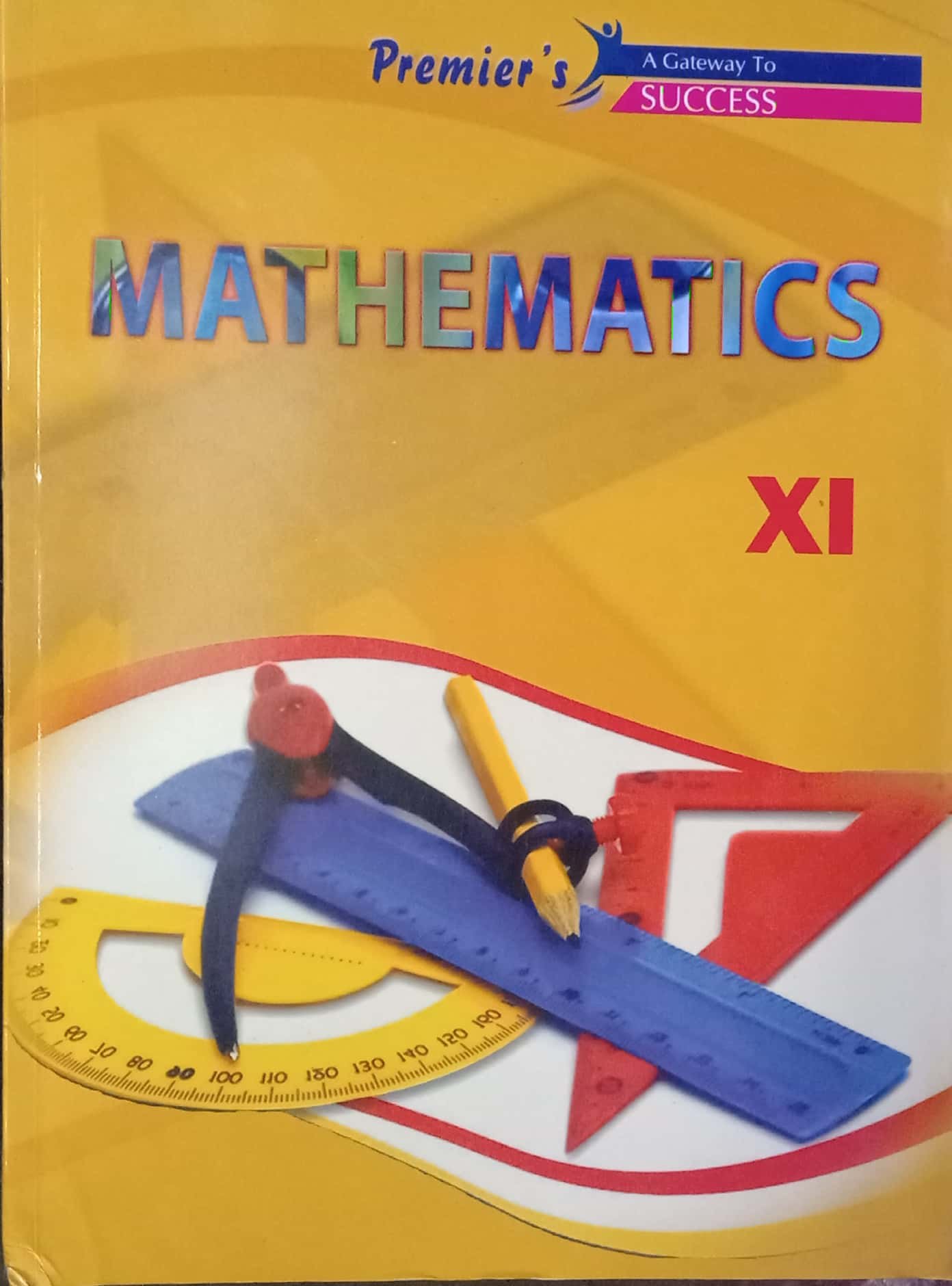
Embarking on the 11th-grade mathematics journey introduces students to a diverse landscape of mathematical concepts, including the intriguing domain of business mathematics. In this comprehensive guide, we will navigate through the intricacies of 11th-grade mathematics and delve into the specialized field of business mathematics, offering step-by-step insights and clarity to empower students on this educational voyage.
Embracing the 11th Grade Mathematics Curriculum
Overview of the 11th Grade Mathematics Syllabus
A foundational understanding of the 11th-grade mathematics syllabus is crucial for effective learning. This section provides a comprehensive overview, outlining the main branches of mathematics covered in the 11th grade and the specific topics that demand attention.
Bridging the Gap Between 10th and 11th Grade Mathematics*
Transitioning from 10th to 11th grade involves building upon previous knowledge. This part focuses on bridging the gap between the mathematical concepts learned in 10th grade and the more advanced ideas introduced in the 11th grade.
Core Concepts in 11th Grade Mathematics
Number Systems: Extending Beyond Real Numbers*
The study of number systems extends beyond real numbers in 11th grade. This section navigates through complex number systems, imaginary numbers, and their applications, providing a deeper understanding of mathematical abstractions.
Algebraic Concepts: Polynomials, Equations, and Inequalities*
Algebraic concepts take center stage in 11th-grade mathematics. This part explores advanced topics such as polynomials, equations, and inequalities, delving into their properties, solutions, and real-world applications.
Trigonometry and Its Applications
Trigonometric Functions: Advanced Levels of Understanding*
Trigonometry advances to intricate levels in the 11th grade. This section explores advanced trigonometric functions, identities, and their applications in solving complex problems in various mathematical contexts.
Inverse Trigonometric Functions: Unraveling Arcane Relationships*
Inverse trigonometric functions add a layer of complexity to trigonometry. This part demystifies inverse trigonometric functions, elucidating their properties and applications in mathematical modeling.
Coordinate Geometry: Analyzing Spatial Relationships
Advanced Concepts in Coordinate Geometry*
Coordinate geometry delves into advanced concepts in 11th grade. This section navigates through the study of conic sections, exploring the properties and equations of circles, ellipses, parabolas, and hyperbolas.
Applications of Coordinate Geometry in Real-Life Scenarios*
Coordinate geometry finds practical applications in various fields. This part showcases how coordinate geometry is used to analyze spatial relationships, solve real-world problems, and model geometric phenomena.
Calculus: Introduction to Derivatives and Integrals
Limits and Continuity: Foundations of Calculus*
Calculus, a cornerstone of advanced mathematics, begins with an understanding of limits and continuity. This section establishes the foundational principles of calculus, paving the way for more complex concepts.
Differentiation and Integration: Core Components of Calculus*
Differentiation and integration are core components of calculus. This part delves into the intricacies of these concepts, covering techniques, applications, and their role in understanding rates of change and accumulation.
Business Mathematics: An Introduction
Understanding the Significance of Business Mathematics*
Business mathematics is a specialized field that applies mathematical techniques to business scenarios. This section introduces the importance of business mathematics in decision-making, financial planning, and optimizing business operations.
Applications of Business Mathematics in Various Sectors*
Business mathematics finds applications across diverse sectors. This part explores how mathematical concepts are utilized in finance, economics, marketing, and management, providing real-world examples to illustrate their relevance.
Financial Mathematics: Managing Money Matters
Time Value of Money: Foundations of Financial Mathematics*
The time value of money is a fundamental concept in financial mathematics. This section explores principles such as compound interest, annuities, and present value, highlighting their significance in financial decision-making.
Investment and Portfolio Management*
Financial mathematics extends to investment and portfolio management. This part navigates through concepts such as risk and return, diversification, and the mathematics behind making sound investment decisions.
Statistics in Business Decision-Making
Descriptive and Inferential Statistics in Business*
Statistics plays a crucial role in business decision-making. This section explores how descriptive and inferential statistics are employed to analyze data, derive insights, and make informed business decisions.
Regression Analysis and Forecasting*
Regression analysis and forecasting are powerful tools in business statistics. This part delves into how these techniques are used to model relationships between variables and make predictions for future trends.
Linear Programming: Optimizing Resources
Introduction to Linear Programming*
Linear programming is a method for optimizing resources in a systematic way. This section introduces the basics of linear programming, exploring its applications in production planning, resource allocation, and decision analysis.
Solving Real-Life Problems with Linear Programming*
Linear programming finds practical use in solving real-life problems. This part provides examples of how linear programming is applied to business scenarios, demonstrating its utility in optimizing operations and maximizing efficiency.
Practical Applications of Mathematics in Business
Data Analysis and Decision Support*
Mathematics serves as a powerful tool for data analysis and decision support in business. This section showcases how mathematical models and statistical tools aid in making informed decisions, managing risks, and optimizing outcomes.
Using Mathematical Models for Business Strategy*
Mathematical models are instrumental in formulating and implementing business strategies. This part explores how mathematical modeling contributes to strategic planning, forecasting, and addressing complex business challenges.
Exam Strategies for Success
Effective Study Techniques and Revision Plans*
As examinations approach, effective study techniques become paramount. This part provides guidance on creating comprehensive study plans, employing effective revision strategies, and managing time efficiently to maximize preparation.
Handling Exam Stress and Anxiety*
Exam stress is a common challenge for students. This section offers practical tips for managing stress and anxiety, promoting a positive mindset, and instilling confidence as students approach their mathematics and business mathematics examinations.
Seeking Support When Needed
Recognizing the Importance of Seeking Guidance*
Mathematics and business mathematics can pose challenges, and seeking guidance is a proactive approach to learning. This section emphasizes the importance of reaching out to teachers, peers, and online resources for assistance when facing difficulties.
Online Forums and Tutoring Platforms for Additional Support*
Online forums and tutoring platforms offer valuable support for students seeking additional help. This part explores reputable platforms where students can clarify doubts, discuss concepts, and enhance their understanding of 11th-grade mathematics and business mathematics.
Conclusion
Navigating the realm of 11th-grade mathematics and business mathematics requires a strategic and comprehensive approach. By understanding the curriculum, revisiting foundational concepts, and engaging with the advanced topics, students not only excel academically but also develop a profound appreciation for the practical applications of mathematics in various fields, especially in the dynamic world of business. This guide serves as a roadmap, guiding students through the complexities of 11th-grade mathematics and business mathematics, inspiring a passion for mathematical exploration and problem-solving that extends far beyond the classroom.
